

Adequate working capital ensures the business can cover routine expenses without relying on external financing. This financial flexibility enables a company to maintain efficient operations and meet obligations like payroll, rent, and supplier payments on https://www.bookstime.com/ time. Working capital is the difference between a company’s current assets and current liabilities. Working capital can be a barometer for a company’s short-term liquidity and financial well-being. A negative amount indicates that a company may face liquidity challenges and may have to incur debt to pay its bills.
- Therefore, working capital ratio is a measure of whether a business is operating with a net positive or negative working capital position.
- The working capital, on the other hand, is an absolute dollar amount and determines the cash and other liquid assets a business has to cover its short-term debts.
- Cash flow is another important financial statement that a company prepares and reports to show its cash inflows and outflows during a specific period, usually a fiscal year or quarter.
- Inventory might linger on shelves longer than you planned, especially if your sales forecast was a tad optimistic.
- Loans of $250K are only approved for customers with strong credit profiles and sufficient verified monthly revenue.
- Both potential issues can lead to delays in the availability of actual liquid assets.
What is an example calculation of the working capital ratio?
Long-term investments, such as real estate, are not considered current assets because working capital ratio formula they cannot be liquidated quickly. Inventory might linger on shelves longer than you planned, especially if your sales forecast was a tad optimistic. If a large part of your current assets is tied up in unsold products, your ratio may look good on paper but won’t necessarily mean you can pay tomorrow’s electric bill without a scramble.

Working capital assessment depends on the industry
- Offer customers a discount (1% to 2%) if they pay within five days of receiving the invoice.
- Additionally, businesses can accelerate receivables collection by offering discounts for early payments, implementing automated collection systems, and closely monitoring accounts receivable.
- Working capital is the amount of liquid assets a company has available, after accounting for its upcoming payments.
- In many industries, a ratio between 1.2 and 2.0 is considered pretty healthy.
- Let me explain a few ways it can lead you astray if you rely on it too heavily.
- The better-known ones include convertible loans, factoring, crowdfunding, and venture debt.
Prior to working with Knowcraft Analytics, Shiv has worked with Deloitte’s business valuation practice for over two years where he was recognized and honoured for working on several challenging engagements. His key focus areas were valuation of early-stage companies and performing various audits for financial reporting and SEC compliance. Change in net working capital is the difference between the net working capital at the end of a period and the net working capital at the beginning of a period. Change in net working capital shows how much the working capital of a company has increased or decreased over a period. A positive change in net working capital means that the net working capital of a company has increased, which indicates that it has generated more cash from its operations. A negative change in net working capital means that the net working capital of a company has decreased, which indicates that it has used more cash for its operations.

Leverage short-term financing

To operate your business effectively, you need to be able to pay off short-term debts and expenses when they become due. Accounts receivable days, inventory days, and accounts payable days all rely on sales or cost of goods sold to calculate. If either sales or COGS is unavailable, the “days” metrics cannot be calculated. When this happens, it may be easier to calculate accounts receivables, inventory, and accounts payables by analyzing the past trend and estimating a future value. This metric is called the working capital ratio because it comes from the working capital calculation.

Accept Payments
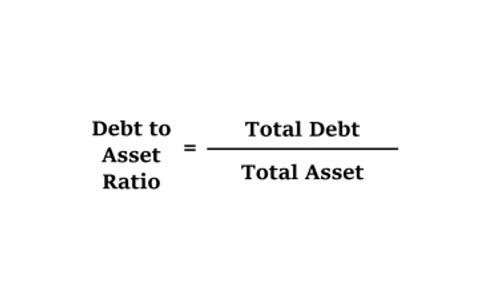
Permanent working capital is the capital required to make liability payments before the company is able to convert assets or client invoice payments into cash. It is the minimum capital required to enable the company to function smoothly. Debt to Asset Ratio According to Fontaine, inventory management is the most critical part of the cycle.
- However, working capital only sheds light on the short-term financial situation.
- It allows businesses to take advantage of favorable market conditions and invest in new projects or expansion plans.
- As you can see, working capital ratio analysis can provide useful information about the financial health and performance of a business.
- The latter objective can be achieved by doing the same on the accounts payable side of operations.
Businesses can determine the amounts of current assets and current liabilities from the balance sheet. The working capital ratio is directly proportional to current assets and inversely related to current liabilities, serving as a fundamental measure of a business’s financial solvency. If you’ve built a solid relationship, they may be open to adjusting your payment schedule. Longer terms mean you can hold onto your cash for a bit longer – enough to handle pressing expenses or get new products off the ground.
Understanding Current Assets and Liabilities
- It is also usually a restrictive concept with strict repayment terms, warrants, and very little flexibility – which is why many companies are looking for a suitable loan alternative.
- Striking the right balance is crucial, as too much working capital can tie up funds unnecessarily.
- The working capital formula gives you an understanding of your cash-flow situation, ensuring you have enough money available to maintain the smooth running of your business.
- It is a measure of a company’s short-term liquidity and is important for performing financial analysis, financial modeling, and managing cash flow.
- This extends the time cash is tied up and adds a layer of uncertainty and risk around collection.
- When looking at your working capital, don’t just think about how easily you can pay your debts.
A company may also have a low working capital ratio, but most of its current liabilities are in the form of long-term debt that is due within one year, which does not reflect its true solvency. A high working capital ratio means that a company is able to convert its inventory and accounts receivable into cash quickly, and manage its accounts payable and short-term debt effectively. This shows that a company has a smooth cash flow cycle and can optimize its use of resources.
Leave a Reply